Top Companies in Automobile Oxygen Sensor Market
Introduction
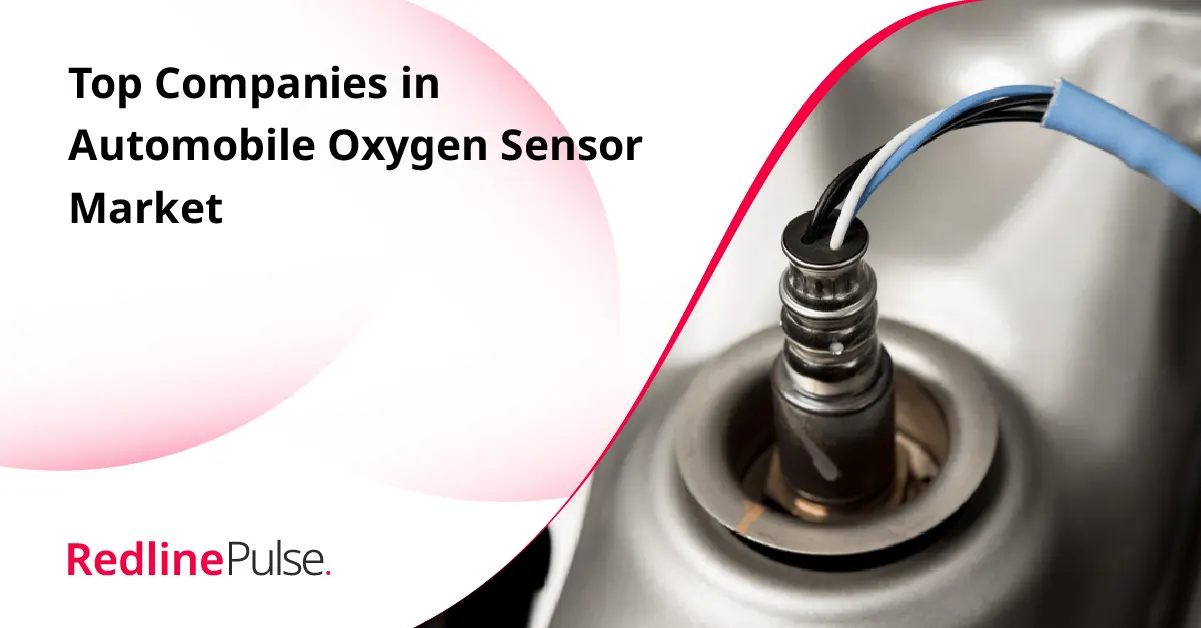
The Top Companies in Automobile Oxygen Sensor Market play a critical role in enabling efficient fuel combustion and emission control in modern vehicles. Oxygen sensors, also known as lambda sensors, measure the oxygen level in exhaust gases to optimize engine performance and reduce emissions. With tightening emission norms globally, the demand for these sensors has surged significantly.
The global automobile oxygen sensor market is estimated to exceed 220 million units annually in production, with passenger vehicles accounting for over 65% of total consumption. Pricing typically ranges between $8 to $45 per unit, depending on sensor type and technology. Increasing vehicle parc and replacement demand are further driving steady consumption across OEM and aftermarket channels.
Automobile Oxygen Sensor Market Overview with Data
The automobile oxygen sensor market is characterized by stable demand from both OEM production and aftermarket replacement cycles. Globally, annual consumption is estimated at over 210–230 million units, with Asia-Pacific contributing nearly 48% of total demand, driven by high vehicle production in China, India, and Japan.
North America and Europe collectively account for approximately 40% of market share, supported by stringent emission regulations and high vehicle ownership rates. In terms of pricing benchmarks:
- Zirconia sensors:$10–$25 per unit
- Titania sensors:$15–$35 per unit
- Wideband oxygen sensors:$25–$45 per unit
OEM contracts typically involve high-volume production runs exceeding 5–10 million units annually per supplier, while aftermarket demand represents nearly 35% of total unit sales, driven by sensor replacement cycles every 60,000–100,000 km.
Top Companies in Automobile Oxygen Sensor Market
Robert Bosch GmbH

Robert Bosch GmbH dominates the automobile oxygen sensor market with a strong global footprint and extensive OEM partnerships. The company produces over 60 million oxygen sensors annually, making it one of the largest suppliers worldwide.
Bosch offers a comprehensive portfolio including zirconia and wideband sensors, catering to both gasoline and diesel engines. Its sensors are widely used across European and Asian automotive brands. The company’s automotive division generates revenues exceeding $50 billion, with oxygen sensors contributing a significant share within its emission control systems.
Bosch’s strategy focuses on technological innovation, particularly in wideband sensor accuracy and durability. Its global manufacturing network ensures cost efficiency and rapid supply to OEMs and aftermarket distributors.
Denso Corporation

Denso Corporation is a key player supplying oxygen sensors primarily to Japanese automakers. The company produces approximately 40–50 million units annually, supported by its strong integration with OEM supply chains.
Denso’s product lineup includes advanced air-fuel ratio sensors and heated oxygen sensors designed for enhanced fuel efficiency. The company generates over $45 billion in annual revenue, with a significant portion derived from powertrain and emission control components.
Denso emphasizes precision engineering and long-life sensors, with replacement intervals extending beyond 100,000 km. Its strategy revolves around maintaining strong OEM relationships while expanding its aftermarket distribution globally.
NGK Spark Plug Co., Ltd.

NGK Spark Plug Co., Ltd. (now known as Niterra) is a leading manufacturer of oxygen sensors with a production capacity exceeding 35 million units per year.
The company specializes in ceramic-based sensor technologies, offering both narrowband and wideband sensors. NGK holds a strong position in the aftermarket segment, accounting for nearly 30% of its oxygen sensor sales volume.
With annual revenues of approximately $4–5 billion, NGK leverages its expertise in ceramics to enhance sensor durability and thermal resistance. The company’s strategy includes expanding its presence in emerging markets and strengthening its aftermarket distribution network.
Continental AG

Continental AG is a major supplier of emission control technologies, including oxygen sensors. The company produces an estimated 20–25 million units annually, serving both OEM and aftermarket customers.
Continental’s product portfolio includes advanced sensor systems integrated with engine control units, enabling real-time emission monitoring. The company generates over $40 billion in annual revenue, with its powertrain division playing a key role in sensor development.
Its strategy focuses on integrating sensors with digital vehicle systems and enhancing sensor response times. Continental also invests in smart sensor technologies aligned with connected and electric vehicle ecosystems.
Hitachi Astemo, Ltd.

Hitachi Astemo, Ltd. is a prominent player formed through the integration of multiple automotive component businesses. The company produces approximately 15–20 million oxygen sensors annually.
Hitachi Astemo offers a wide range of air-fuel ratio sensors and exhaust gas sensors, primarily serving Japanese and global OEMs. The company’s revenue exceeds $15 billion, with strong capabilities in powertrain and electronic control systems.
Its strategy emphasizes system-level integration, combining sensors with advanced engine management solutions. This approach enhances overall vehicle efficiency and positions the company as a key supplier in emission control technologies.
Delphi Technologies (BorgWarner Inc.)

BorgWarner Inc. (through Delphi Technologies) is a significant player in the oxygen sensor market, particularly in the aftermarket segment. The company supplies over 10–15 million units annually.
Delphi’s oxygen sensors are known for durability and compatibility across a wide range of vehicle models. BorgWarner generates annual revenues of around $14 billion, with emission and thermal systems forming a core business segment.
The company’s strategy focuses on expanding its aftermarket footprint and leveraging its global distribution network. It also invests in sensor technologies that support hybrid and low-emission vehicles.
Competitive Landscape Insights
The Top Companies in Automobile Oxygen Sensor Market operate in a moderately consolidated environment, with the top five players accounting for approximately 65–70% of total market share.
- Bosch:~25% market share
- Denso:~18%
- NGK Spark Plug:~12%
- Continental & Hitachi Astemo (combined):~15%
Pricing segmentation reflects technology differentiation:
- Entry-level sensors: $8–$15
- Mid-range sensors: $15–$30
- Premium wideband sensors: $30–$45
From a supply chain perspective, OEM contracts dominate high-volume production, while aftermarket channels provide higher margins. Suppliers maintain regional manufacturing hubs to reduce logistics costs and ensure compliance with local regulations.
Raw material sourcing, particularly for ceramics and precious metals, plays a critical role in cost structures. Companies are increasingly investing in localized production to mitigate supply disruptions and currency fluctuations.
Conclusion
The Top Companies in Automobile Oxygen Sensor Market continue to drive innovation and efficiency in emission control technologies. Leading players such as Bosch, Denso, and NGK dominate through large-scale production, strong OEM relationships, and advanced sensor technologies.
With annual production exceeding 220 million units and steady replacement demand, the market offers consistent opportunities for suppliers and procurement professionals. Competitive differentiation increasingly depends on sensor accuracy, durability, and integration with advanced vehicle systems.
For decision-makers, selecting the right supplier involves balancing cost, performance, and supply reliability—factors that top companies consistently optimize through global manufacturing and strategic partnerships.
Author : Aakash Kumar
Aakash Kumar is a dynamic Market Research Analyst with 4+ years of experience and a passion for data-driven storytelling. He specializes in analyzing industry trends and delivering actionable insights that support smarter business decisions and long-term success.
