Top 5 Companies in Electric Tuk Tuk Market | Industry Leaders & Insights
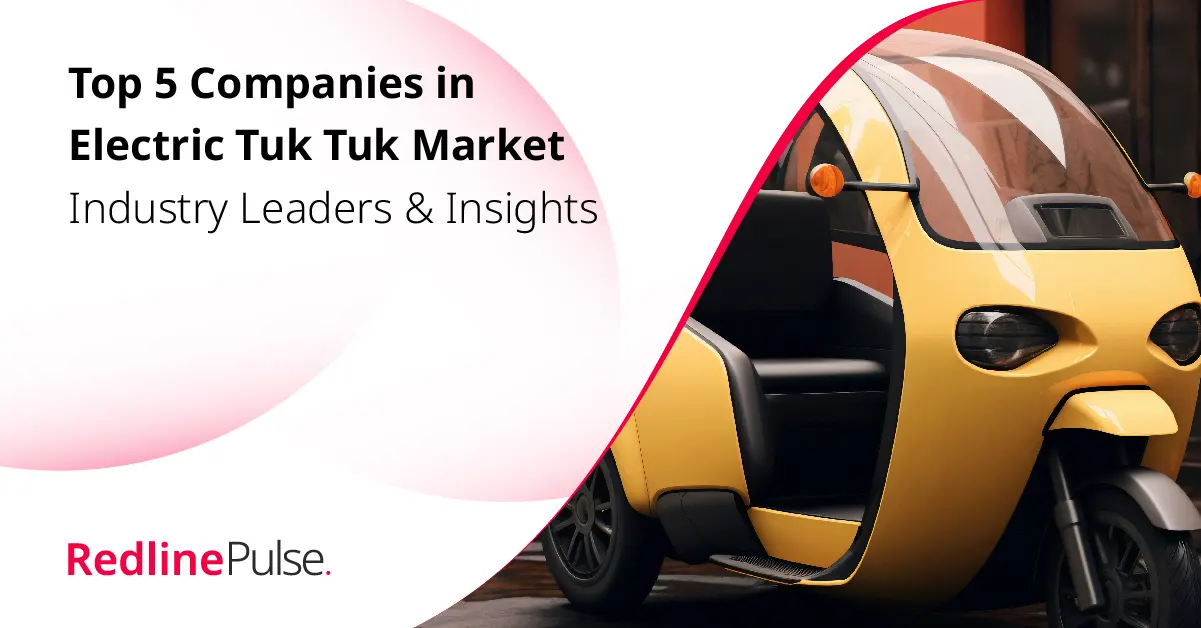
The Top Companies in Electric Tuk Tuk Market are shaping a rapidly evolving segment within the urban mobility ecosystem. Electric tuk tuks—commonly known as e-rickshaws or three-wheelers—are gaining traction due to their low operating costs, minimal emissions, and suitability for last-mile transport. The global market has witnessed strong adoption, with annual production volumes exceeding 1.2 million units, particularly concentrated in Asia. India alone contributes over 55% of total electric three-wheeler demand, driven by favorable policies and rising fuel costs. These vehicles typically operate at speeds of 25–55 km/h, making them ideal for short-distance urban and semi-urban routes. As demand scales, leading manufacturers are focusing on battery efficiency, cost optimization, and fleet partnerships.
The electric tuk tuk market is characterized by high-volume production and cost-sensitive procurement dynamics. Annual consumption is estimated at over 1.5 million units globally, with Asia-Pacific dominating the landscape, accounting for approximately 80–85% market share. India, China, and Southeast Asia remain the largest consumption hubs.
From a pricing perspective, electric tuk tuks are typically priced between USD 900 and USD 3,500 per unit, depending on battery type (lead-acid vs lithium-ion), range, and build quality. Entry-level models powered by lead-acid batteries are priced closer to USD 900–1,200, while advanced lithium-ion variants range from USD 2,000 to USD 3,500. Battery capacity generally varies between 3 kWh and 10 kWh, delivering a driving range of 70–150 km per charge. Fleet operators often prioritize models with higher durability and battery lifecycle exceeding 800–1,200 charge cycles.
Top 5 Companies in Electric Tuk Tuk Market
Mahindra Electric Mobility Limited

Mahindra Electric Mobility Limited is a key player in the electric tuk tuk market, leveraging its strong automotive legacy and extensive distribution network. The company produces a wide range of electric three-wheelers, including passenger and cargo variants. Its Treo series has gained significant traction, offering lithium-ion battery options with a range of up to 130 km per charge.
Mahindra Electric operates manufacturing facilities with an annual capacity exceeding 100,000 units, positioning itself as a premium player in the segment. The company focuses on fleet partnerships and financing solutions to expand its market reach. With strong after-sales service and nationwide presence across 300+ dealerships, Mahindra maintains a competitive edge in quality and reliability.
Bajaj Auto Limited

Bajaj Auto Limited is a major contributor to the electric three-wheeler ecosystem through its well-established brand and engineering capabilities. Its electric tuk tuk offerings emphasize durability, cost efficiency, and performance. Bajaj’s production scale exceeds 200,000 three-wheelers annually, including both electric and conventional variants.
The company’s pricing strategy is competitive, with electric models positioned in the USD 1,500–2,500 range, targeting fleet operators and small business owners. Bajaj leverages its export network spanning over 70 countries, enabling it to tap into emerging markets across Africa and Southeast Asia. Its focus on robust chassis design and low maintenance costs strengthens its position among high-volume buyers.
Piaggio Vehicles Pvt. Ltd.
Piaggio Vehicles Pvt. Ltd., a subsidiary of the Piaggio Group, has established a strong presence in the electric tuk tuk market with its Ape Electrik range. The company combines European engineering expertise with localized manufacturing, producing vehicles with a range of approximately 90–110 km per charge.
Piaggio’s annual production capacity in India exceeds 150,000 units, with a growing share of electric variants. The company positions itself in the mid-to-premium segment, with pricing typically between USD 2,000 and USD 3,000. Its strategic focus includes expanding dealership networks and enhancing battery technology. With operations in over 50 international markets, Piaggio continues to strengthen its global footprint.
YC Electric Vehicle

YC Electric Vehicle is one of the largest manufacturers of electric rickshaws in India, known for its high production volumes and cost-effective models. The company produces over 80,000 units annually, catering primarily to domestic demand.
Its product portfolio includes passenger and cargo electric tuk tuks with lead-acid battery configurations, priced between USD 900 and USD 1,500. YC Electric focuses on affordability and accessibility, making it a preferred choice for first-time buyers and small fleet operators. The company has a strong distribution network across northern and eastern India, with over 200 dealers, ensuring widespread market penetration.
Atul Auto Limited

Atul Auto Limited is a prominent player in the three-wheeler segment, with a growing emphasis on electric mobility. The company’s electric tuk tuk offerings are designed for both passenger and cargo applications, with a focus on durability and efficiency.
Atul Auto operates manufacturing facilities with a production capacity of approximately 60,000–70,000 units annually. Its electric models are priced in the USD 1,200–2,200 range, targeting cost-sensitive markets. The company has a presence in over 20 countries, particularly in Africa and Latin America. Its strategy includes expanding electric product lines and strengthening export channels to drive growth.
Competitive Landscape Insights
The electric tuk tuk market is moderately fragmented, with the top five players collectively holding approximately 40–45% market share, while the remaining share is distributed among regional and unorganized manufacturers.
Pricing segmentation plays a critical role in procurement decisions:
- Low-cost segment (USD 900–1,500):Dominated by local manufacturers using lead-acid batteries
- Mid-range segment (USD 1,500–2,500):Balanced mix of affordability and performance
- Premium segment (USD 2,500–3,500):Lithium-ion models with extended range and durability
Supply chain dynamics are heavily influenced by battery sourcing, which accounts for nearly 30–40% of total vehicle cost. Manufacturers are increasingly investing in localized battery assembly to reduce costs and improve margins.
Distribution networks and after-sales service capabilities are key differentiators, with leading companies maintaining 100–300 dealer touchpoints to ensure accessibility. Fleet partnerships and financing solutions are also emerging as critical growth drivers.
Conclusion
The Top Companies in Electric Tuk Tuk Market are driving innovation and scale in a cost-sensitive yet high-growth mobility segment. With annual production exceeding 1 million units and strong demand from emerging economies, the market presents significant opportunities for procurement professionals and fleet operators.
Leading players such as Mahindra Electric, Bajaj Auto, and Piaggio are focusing on technology, distribution, and partnerships to strengthen their positions, while regional manufacturers compete aggressively on pricing. As battery technology evolves and infrastructure improves, the competitive landscape is expected to become more structured, offering better quality, efficiency, and long-term value for buyers.
Author : Nora R. Boone
Nora R. Boone is a Research Analyst with 6 years of expertise in Electric Vehicles & Charging infrastructure. She focuses on EV adoption trends, battery technologies, and charging networks supporting the transition to electric mobility.